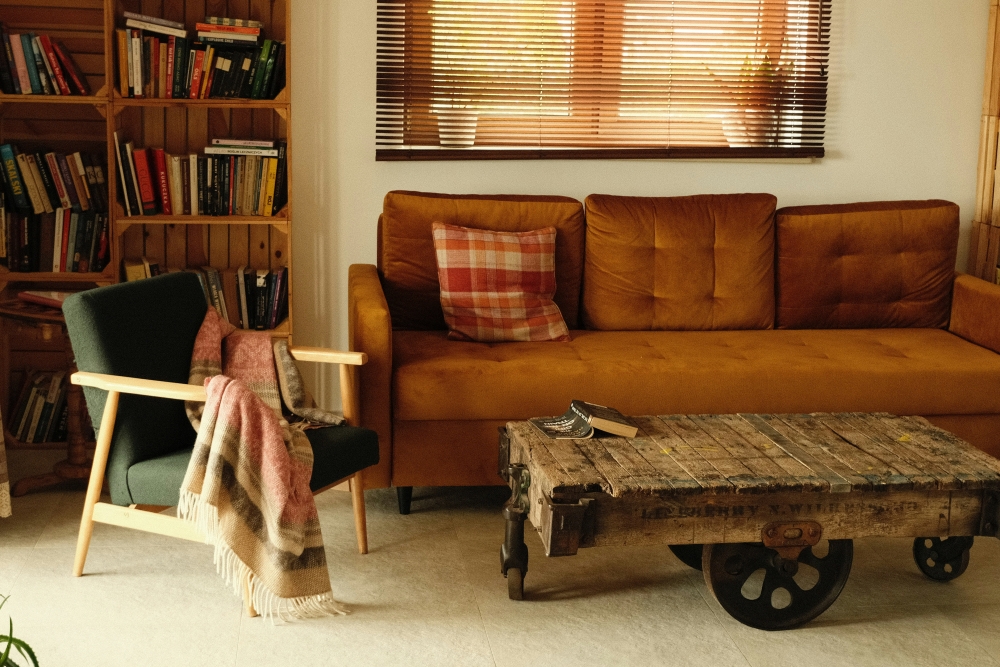

Picture this: your customer points their phone at an empty corner of their living room, and suddenly, your $2,500 designer sofa appears there in perfect scale. They walk around it, check the fabric texture, even change the color. That’s the power of augmented reality today, and it’s reshaping how businesses sell products in 2025. The global AR market hit $94.82 billion this year and experts project it’ll surge to $511 billion by 2030 – that’s explosive growth you can’t ignore.
Why Professional AR 3D Modeling Makes Business Sense
When IKEA implemented AR product visualization in their mobile app, something remarkable happened. Their conversion rates jumped 94% compared to products without this technology. Not a typo – ninety-four percent.
Here’s what separates amateur models from professional ar 3d modeling services: optimization. Your model might look stunning on a high-end workstation, but will it run smoothly on a three-year-old Android phone? Professional studios understand that 70% of mobile GPUs can now handle 100k-1M polygon models in real-time, fundamentally changing what’s possible. They know exactly where to push detail and where to pull back.
The workflow involves several critical stages:
- Polygon optimization: Reducing mesh complexity to 10-40k polygons for mobile AR while maintaining visual fidelity through smart topology management
- PBR material creation: Physically-based rendering materials that respond realistically to different lighting conditions in users’ environments
- UV unwrapping and texture mapping: Efficient texture layouts that maximize resolution while minimizing file size – crucial when users download assets on cellular networks
- Real-time testing: Validation across multiple devices to ensure consistent performance from flagship phones to budget models
Think of it like preparing food for a long journey – you can’t just pack your fanciest dishes. Everything needs to travel well.
“The sweet spot for mobile AR assets sits between 15-50k polygons. Go higher and you risk stuttering frame rates; go lower and products lose the detail that drives purchase confidence.”
Technical Requirements That Actually Matter
Let’s cut through the jargon. When you’re evaluating AR 3D modeling services, here’s what genuinely impacts your bottom line.
File formats matter more than you’d think. Your models need to work across platforms – iOS ARKit, Android ARCore, and WebAR solutions. GLB and GLTF formats have become industry standard for good reason: they bundle geometry, materials, and animations in a single, compressed package. Kстати, WebAR has transformed the game entirely because customers don’t need to download an app anymore.
Texture resolution creates an interesting balancing act. A single 4K texture looks gorgeous but weighs 64MB uncompressed. Compress it poorly and you get artifacts. Smart studios use multiple smaller textures instead – maybe 2K for main surfaces and 1K for less visible areas. The mobile AR market reached $13.8 billion in 2025 precisely because professionals figured out these optimization tricks.
Level of Detail (LOD) systems work like magic for performance. Your sofa displays in high detail when customers view it up close, but automatically switches to a simpler version when they step back. Not everyone implements this correctly. The difference between smooth 60fps and choppy 30fps often comes down to proper LOD management.
“Don’t chase polygon counts blindly. A well-optimized 30k polygon model with excellent textures will outperform a poorly-built 15k model every time. Topology quality beats raw numbers.”
Cost Structures and Timeline Realities
What should you budget? Honestly, it varies wildly based on complexity. A simple product like a lamp might run $500-1,500 for professional augmented reality 3d modeling. Mid-complexity items – furniture, appliances, small vehicles – typically land in the $2,000-5,000 range. Complex products with moving parts, configurators, or multiple material options can push $10,000+.
Timeline expectations need grounding in reality too. Rush jobs rarely work well in this field. A typical product requires:
- Initial modeling and texturing: 3-7 days depending on complexity and whether CAD files are provided
- AR optimization phase: 2-3 days for polygon reduction, LOD creation, and performance testing across target devices
- Integration and QA: 1-2 days to implement in your platform and verify everything works as expected
One furniture retailer I spoke with last season mentioned they underestimated the iteration cycles. They wanted to adjust materials and finishes after seeing the first version – completely normal, but it added a week. Build buffer time into your launch schedule.
The investment pays off though. By 2030, Asia-Pacific’s AR market will grow at 40.8% annually, driven largely by e-commerce applications. Companies implementing AR product visualization see reduced return rates because customers know exactly what they’re buying. That alone can justify the cost.
Choosing the Right Service Provider
Shopping for professional ar 3d modeling services? Red flags to watch for: anyone promising “unlimited revisions” probably doesn’t scope projects properly. Studios that can’t show you actual mobile device demos – not just rendered videos – might not understand real-world constraints.
Smart questions to ask include: What’s your typical polygon budget for mobile AR? How do you handle texture compression? Do you provide multiple LOD versions? Can you integrate with our existing platform? What file formats do you deliver?
Portfolio matters enormously. Not just pretty pictures – ask to actually test their AR models on your phone. Do they load quickly? Run smoothly? Look good in different lighting? In a New York showroom last spring, I tested probably fifteen different AR furniture models. Maybe three performed acceptably under real conditions.
Communication style reveals a lot too. Responsive providers who explain technical decisions in plain language tend to deliver better results. If someone can’t explain why they chose 35k polygons instead of 50k, they might be guessing.
Industry statistics show enterprises are standardizing on AR for decision-making across manufacturing, healthcare, and energy sectors. The technology isn’t experimental anymore – it’s production-ready. But implementation quality separates success stories from expensive disappointments.
Consider your specific use case carefully. WebAR solutions work brilliantly for product visualization because there’s no app barrier. But if you need advanced features like surface occlusion or environmental lighting, native apps through ARCore or ARKit deliver superior experiences. Your provider should guide these choices based on your actual business needs, not what’s technically impressive.
The AR revolution isn’t coming – it arrived. Over 1.7 billion mobile devices support AR experiences right now. Your competitors are probably already experimenting. The question isn’t whether to invest in quality 3D modeling for augmented reality applications, but how quickly you can implement it effectively. Choose partners who understand both the technical requirements and your business objectives. That combination drives results that actually matter: engaged customers, confident purchases, and reduced returns.
Do you know someone who might enjoy this article or would find it useful? Share it!