
Picture this: you’re pitching a $15 million commercial project to investors who’ve seen a thousand boring blueprints. Your competitors walk in with flat CAD drawings. You? You unveil a photorealistic sunset view of their future property, complete with bustling parking lots and perfectly landscaped gardens. That’s not magic – that’s the power of professional architectural visualization at work.
Why Architectural Exterior Rendering Matters More Than Ever
The numbers don’t lie. The global 3D rendering market exploded from $5.37 billion in 2025 and experts forecast it’ll hit $26.65 billion by 2034 – that’s nearly five times growth in less than a decade. Why? Because real estate developers finally figured out what savvy marketers knew all along: people buy with their eyes first, their wallets second.
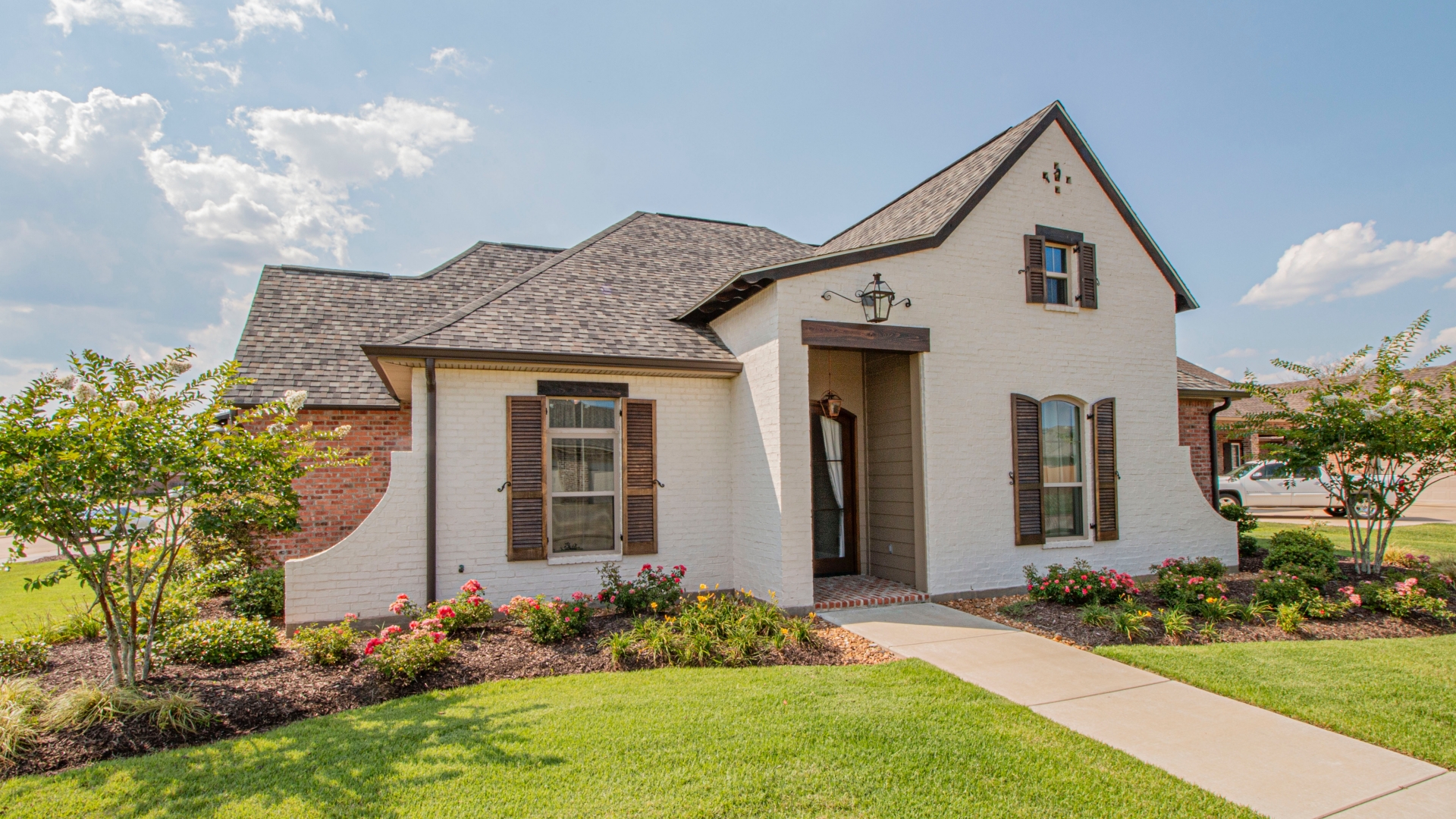
When you’re dealing with properties that haven’t broken ground yet, traditional photography becomes useless. You can’t photograph something that exists only as a concept. Enter CGI rendering – the bridge between imagination and reality. Modern exterior 3d rendering services create imagery so convincing that potential buyers forget they’re looking at pixels instead of photographs.
Honestly, I’ve watched this shift happen in real time. Three years back, a mid-sized development firm in Miami struggled to pre-sell units in their luxury condo project. Standard floor plans weren’t cutting it. They invested $8,000 in high-quality exterior visualization showing the building at different times of day, with realistic palm trees swaying and couples strolling the waterfront promenade. Within six weeks, they’d sold 40% of units before laying a single brick.
“Photorealistic exterior rendering isn’t just a presentation tool anymore – it’s your most powerful sales asset. Properties with professional 3D visualization consistently see 35-50% faster sales cycles compared to traditional marketing materials.” – Michael Torres, Commercial Real Estate Strategist
What makes exterior rendering particularly valuable? Scale and context. You’re not just showing a building – you’re demonstrating how it fits into the neighborhood fabric, how shadows fall across the facade at noon, how the entrance looks welcoming at twilight. This environmental storytelling creates emotional connections that blueprints simply cannot achieve.
Breaking Down Exterior Visualization Services and Pricing
Let’s talk money, because that’s probably why you’re here. Professional exterior rendering typically costs between $500 and $3,000 per image, depending on complexity and quality tier. But here’s what most people miss: that price range isn’t arbitrary – it reflects vastly different service levels.
Low-end options ($500-$800) work perfectly for concept approvals and early-stage planning. You’ll get clean imagery with basic texturing and standard lighting. Good enough for municipal permits? Absolutely. Impressive enough to wow investors? Not quite.
Mid-range rendering ($800-$1,500) hits the sweet spot for most projects. This tier includes detailed materials, realistic landscaping, atmospheric effects like fog or rain, and careful attention to lighting that makes buildings pop. Most residential developers and boutique commercial firms operate comfortably in this range.
Premium photorealistic work ($1,500-$3,000+) delivers magazine-quality results with pixel-perfect accuracy. We’re talking individually placed blades of grass, weathering on brick facades, reflections in windows showing the actual surrounding environment. Luxury properties and landmark buildings justify this investment because the visual impact directly correlates with perceived value.
Several factors push costs higher or lower:
- Project scale: A single-family home renders faster than a sprawling shopping complex with parking structures and dozens of storefronts
- Viewing angles: Eye-level shots cost less than dramatic aerial perspectives that require extensive environmental modeling
- Revision rounds: Most studios include 2-3 revision cycles; excessive changes add $200-$500 per round
- Timeline urgency: Rush jobs (under one week) typically carry 25-50% premiums over standard 2-3 week turnaround
- Animation vs. stills: Motion walkthroughs start around $5,000 and can exceed $15,000 for complex sequences
By the way, many firms offer package deals that significantly reduce per-image costs. A single exterior view might run $1,200, but a package with four angles often costs $3,500 total – that’s substantial savings for comprehensive marketing materials.
“Smart developers budget 2-3% of their total marketing spend on quality visualization. For a $50 million project with a $500K marketing budget, investing $10-15K in professional rendering isn’t an expense – it’s insurance against unsold inventory.” – Patricia Chen, Development Marketing Consultant
Choosing the Right 3D Exterior Rendering Company
Not all rendering studios are created equal. I learned this the hard way working with a Seattle-based architect who hired the cheapest bidder for a waterfront restaurant project. The results? Technically competent but soulless images that failed to capture the property’s magical golden-hour ambiance. They ended up paying twice – once for mediocre work, again for proper visualization that actually sold the concept.
Here’s your vetting checklist when evaluating providers of exterior 3d rendering services:
- Portfolio depth: Don’t just count pretty pictures – look for projects similar to yours in scale, style, and complexity
- Technical capabilities: Ask about their software stack (V-Ray, Corona, Lumion) and hardware infrastructure; render farms produce faster results than single workstations
- Communication style: Timezone alignment and language fluency matter more than people admit; misunderstandings cost time and money
- Revision policies: Crystal-clear terms prevent scope creep; know exactly what changes are included and what triggers additional fees
- File deliverables: Verify you’ll receive high-resolution files suitable for both print (300 DPI minimum) and web use
Geography plays an interesting role here. North American rendering services dominate the market with sophisticated technology adoption, but talented studios operate worldwide. Eastern European and Asian firms often deliver comparable quality at 30-40% lower costs, though communication challenges and time differences require extra project management effort.
One practical approach: request a paid test image before committing to full packages. Spend $400-$600 on a single view to evaluate their interpretation of your vision, attention to detail, and responsiveness to feedback. This small investment prevents expensive disappointments down the road.
Maximizing ROI From Residential and Commercial Building Rendering
The real question isn’t whether exterior visualization works – it’s how to extract maximum value from your investment. Smart property marketers treat 3D renders as versatile assets, not one-time presentations.
Consider these strategic applications beyond basic client presentations. Use your exterior renders across multiple marketing channels: website hero images, social media campaigns, email newsletters, printed brochures, billboard advertisements, and investor pitch decks. That $2,000 image suddenly delivers value across a dozen touchpoints.
Seasonal variations create additional mileage. A rendering studio can often produce spring, summer, and winter versions of the same view for 30-40% less than the original since the base model already exists. This gives different seasons for various marketing campaigns throughout the year without starting from scratch.
Interactive applications are gaining serious traction too. Furniture retailers report conversion uplifts reaching 94% when customers interact with 3D visualization, and real estate follows similar patterns. Virtual property tours built from exterior renders let prospects explore buildings from any angle, creating engagement levels that static images simply cannot match.
Kinda interesting how pricing psychology works here. Properties marketed with professional photorealistic rendering consistently command 8-12% price premiums compared to identical units sold with standard photography or CAD drawings. Buyers perceive higher value when they can viscerally imagine themselves in beautifully presented spaces.
Pre-construction sales represent perhaps the highest-value application. Developers who lock in 30-40% of units before breaking ground dramatically reduce financing costs and project risk. Quality exterior visualization makes this possible by giving buyers confidence to commit capital toward something that exists only on paper.
The metrics speak volumes: real estate marketing averages a 4.7% conversion rate across all channels, but properties with professional 3D visualization often see conversion rates 25-30% higher than that baseline. When you’re operating on thin margins, those percentage points translate directly to bottom-line profitability.
One final consideration – archival value. Unlike photography that becomes dated as properties age, quality 3D rendering maintains its impact indefinitely. That luxury townhome exterior you commissioned in 2025 works just as effectively in marketing materials five years later, assuming the design remains contemporary.
The construction and real estate sectors are betting big on this technology, and for good reason. Whether you’re an architect visualizing bold concepts, a developer selling pre-construction units, or a marketing agency creating compelling property campaigns, exterior 3d rendering services deliver measurable returns that justify the investment many times over.
Ready to see your project come to life before the first foundation is poured? That’s the transformative power of professional architectural visualization – turning blueprints into believable realities that sell.
Do you know someone who might enjoy this article or would find it useful? Share it!