
 Unsplash – CC0 License
Driveways are not merely functional elements on modern properties. They are part of the overall framing of architectural design. Without them, many homes just look rather odd. That’s why they are now considered an architectural extension of the house, providing a seamless visual aesthetic that transforms the home’s curb appeal.
Here are some of the principles of inspiring driveways that help to properly frame modern homes.
Works with the home’s existing architecture
One of the primary principles of inspiring driveways that frame modern homes is that they work with the house’s existing architecture. They are a continuous element rather than something deliberately separate. Usually, modern properties have large-format pavers or minimalist, sleek concrete and geometric facades. These add the right colours, tones, and textures to complement the theme of the rest of the house.
Many architects work with their local pavers company to design properties using materials already available. These steps improve the level of cohesion while also enabling functional vehicle movement to and from the house. They also work together to accommodate parking spaces for guests or other visitors.
Clean lines in geometric simplicity
Another principle of inspiring driveways for modern homes is their clear lines, clean lines, and geometric simplicity. Many of these driveways prioritize straight edges and use things like scored lines and checkerboard effects to create visual interest. Unlike classical or traditional designs, there’s minimal ornamentation.
The focus is mainly on ornate and rustic details. At the same time, architects try to steer clear of busy designs that have a lot of clutter in them. Instead, they look for more monolithic patterns and ideas that spark interest without polluting the visual effect.
Sometimes, modern driveways feature interesting textures and accessories like exposed aggregate or broom finishes. These add another layer of interest while also maintaining the modern look. Such principles amplify home’s geometry without necessarily competing for attention themselves.
Thoughtful layout and flow
There’s also a principle concerning driveways, relating to the fact that they are psychological gateways to a property. For this reason, it’s critical for them to have a thoughtful layout and flow. While straight lines can be useful in some contexts, they don’t work on most properties, even if they have a modern design. Linear homes often require the contrast of a wavy or gently curving pathway to soften rigid architecture.
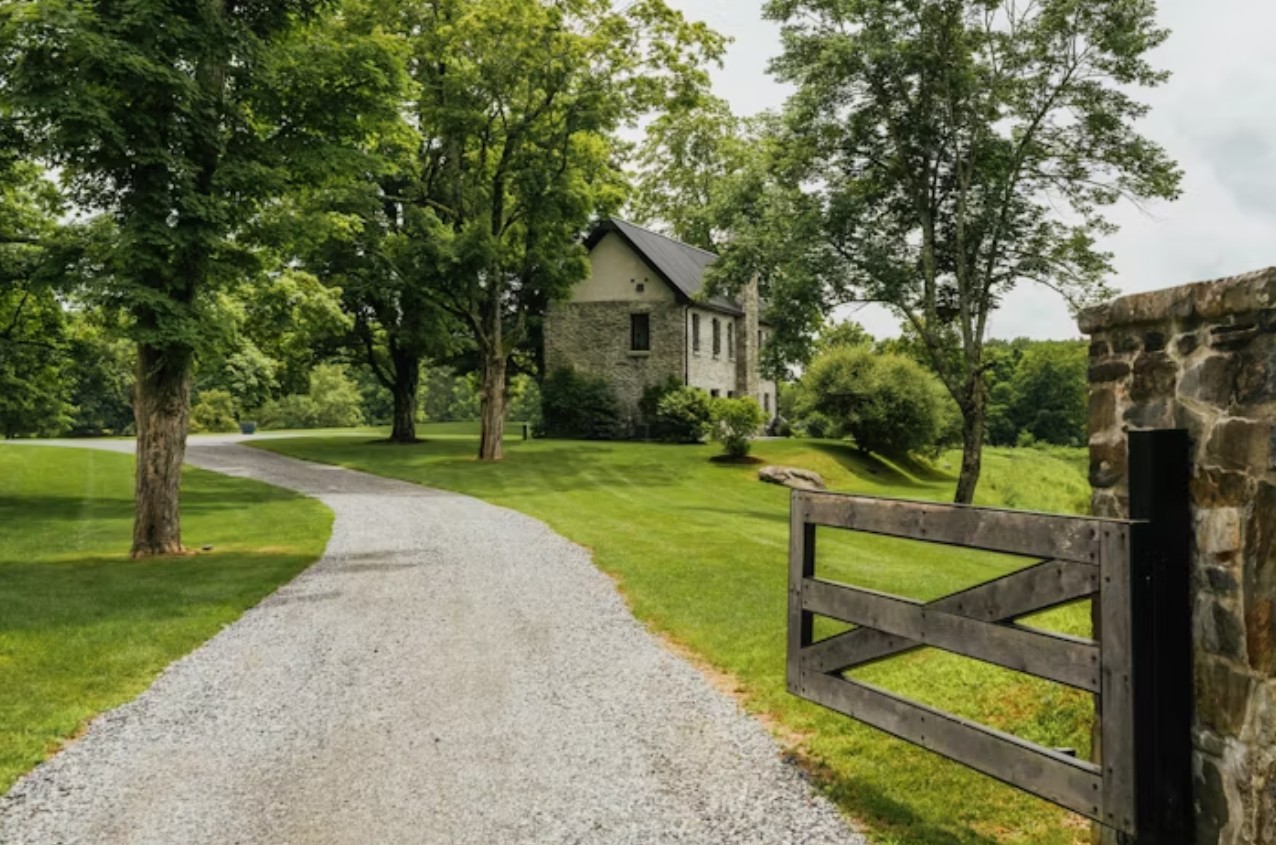
A lot of driveways meander through idyllic landscapes and are up to the front of the property. They also have circular or horseshoe-shaped turning areas at the front to allow people to maneuver their vehicles and get into the right parking spots. Elevated or sloped designs add a sense of perspective and drama to the exterior facade of homes. The grander the home, the more impressive landscaping can be, especially if a driveway goes down to a property or up to it.
Material choices that balance function and form
Modern driveways also make use of materials that balance function and form. Historically, driveway materials weren’t particularly important because they didn’t have to bear the weight of modern vehicles. Horses, perhaps, and maybe people, but not cars, trucks, and vans. Now, though, materials have to cope with every type of vehicle, including removal vehicles that may only show up a few times in a property’s lifetime.
The most common material used on driveways today is concrete because it is versatile and customizable with different stains. It also scores nicely and can be combined with exposed aggregate for a more attractive minimalist appearance.
Another option is pavers, like stone or concrete, although these can be more prone to cracking. They allow for permeability and can be shaped around things like grass inlays. They’re also durable and replaceable, so if one paver breaks, another one can take its place.
Another option seen on many stately homes and grand properties is gravel. This is actually one of the simplest and most effective driveway materials and works best when the driveway is long and combined with steel or stone borders. Gravel has a natural-looking texture and is eco-friendly. If combined with the right subsurface aggregate, it won’t sink into the ground and cause further damage.
Integration of landscaping and soft elements
Another part of the creation of inspiring driveways for modern homes is the integration of landscaping and soft elements. Designers try to balance hardscaping and greenery to prevent driveways from feeling stark. Too much concrete in a modern home can feel clinical and uninviting, while ornamental grasses and tree-lined approaches for privacy reverse this. Sometimes architects will opt for ribbon drives with flower inlays. These are attractive, streamlined drives that allow more of the property to be given over to nature. It’s also possible to incorporate grass strips into driveways where the wheels are not expected to go. Again, this creates more contrast and visual interest, preventing the front of the home from looking like it’s been concreted over.
Sustainability and permeability
If you’re thinking about creating an inspiring driveway that frames your modern home, make sure you take into account sustainability and permeability. You need pavers with gaps, porous concrete to manage runoff, and materials that reduce heat island defects. Monolithic expanses of concrete can raise the temperature locally and force your air conditioning units to work harder. They can also make it unpleasant to be outside on hot days. If you include more natural materials and plants, it can reduce the heat island effect.
Lighting and edging
Finally, inspiring driveways for modern homes need the right lighting and edging. A lot of property owners these days include integrated LED lighting or recessed lighting on the edge of the driveway or along the paths running alongside it. These highlight the driveway at night and make it much more attractive, especially when combined with general home lighting. Lights accentuate lines and create depth that is just not possible otherwise. As for edging, it’s critical that driveways have clean borders made of contrasting pavers, stone, metal, or another material that creates a dividing line between the driveway and the rest of the front garden. These elements create a sense of polish and make everything look complete.
Do you know someone who might enjoy this article or would find it useful? Share it!